Day Habilitation Programs in Nebraska: What to Expect and How to Choose
This guide explains what day habilitation programs actually offer.
When your adult child with IDD ages out of school at 21, one of the most immediate losses is the day structure. For years, they had somewhere to go Monday through Friday — a classroom, a routine, teachers, peers, activities. Then suddenly, that's gone.
Or when you're caring for an adult family member with IDD and you work full-time, you need somewhere safe and meaningful for them to spend their days while you're at work.
Or when your loved one is capable of more than sitting at home watching TV all day but isn't ready for competitive employment, you want them to have purpose, social connection, and activities that engage them.
This is where day habilitation programs come in.
Day habilitation — often called "day hab" or "day programs" — provides structured daytime activities, skill-building, and community engagement for adults with intellectual and developmental disabilities. It's one of the most commonly used services in Nebraska's waiver system because it addresses a fundamental need: giving adults with IDD somewhere meaningful to be during the day.
This guide explains what day habilitation programs actually offer, how to know if it's right for your loved one, what to look for when choosing a program, and how to access day hab services in Nebraska.
What is Day Habilitation?
Day habilitation is a waiver service that provides assistance with acquiring, retaining, and improving skills related to activities of daily living, socialization, and community integration. It's delivered in group settings during typical daytime hours — think of it as a day program designed for adults with IDD.
The word "habilitation" is key. It doesn't mean "rehabilitation" — bringing back skills someone lost. It means helping someone develop and maintain skills they need for daily life, even if they never had those skills before.
What day habilitation programs typically include:
Skill-building activities focused on daily living, social skills, communication, and functional academics
Community outings and integration activities
Socialization and peer interaction
Structured activities and routines throughout the day
Support from trained staff who understand IDD
Transportation to and from the program in many cases
Meals or snacks depending on the program
Day habilitation gives adults with IDD a place to go, things to do, people to interact with, and opportunities to learn and grow. It provides structure and purpose during the day.
Who Benefits from Day Habilitation?
Day habilitation serves a wide range of adults with IDD who need daytime support and structure but aren't in competitive employment or don't need 24/7 residential care.
People who benefit from day habilitation:
Young adults who recently aged out of school-based services and need a structured day program to replace what they lost when special education ended.
Adults with IDD whose families work during the day and need somewhere safe and engaging for their loved one to be while they're at work.
Individuals who live in residential settings like shared living or group homes and need daytime activities outside the home.
People who aren't ready for competitive employment but want more than just staying home — they need engagement, social connection, and skill-building opportunities.
Adults whose families are aging and can't provide full-time care and supervision anymore but want their loved one to remain living at home.
The common thread is the need for daytime structure, socialization, and support in a setting designed specifically for adults with IDD.
What Does a Typical Day Look Like?
Day habilitation programs vary in their structure and offerings, but most follow a similar general framework.
Programs typically run Monday through Friday during daytime hours, often from around 8 AM or 9 AM until 3 PM or 4 PM, mirroring a typical work or school day. Many programs provide transportation, picking participants up in the morning and dropping them off in the afternoon.
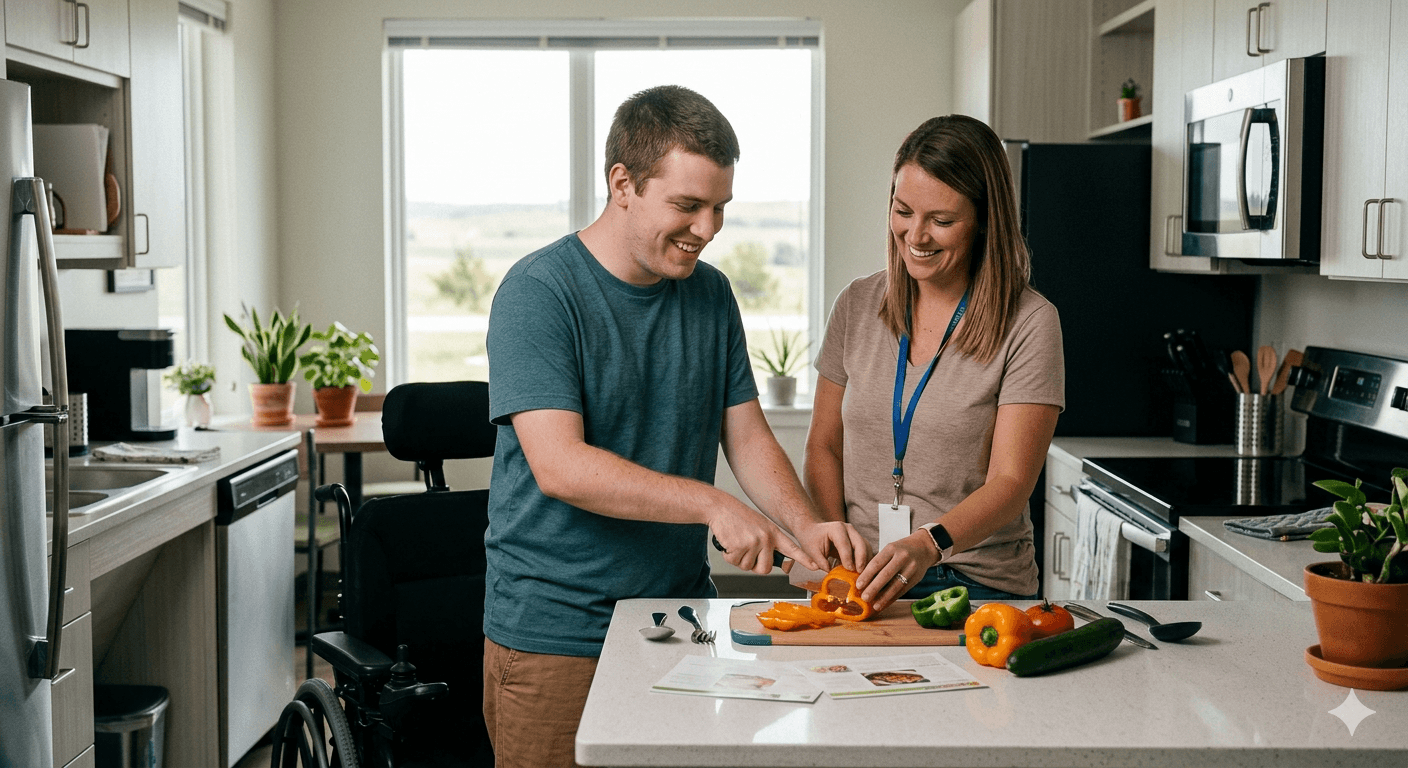
The day is structured with a mix of activities. Morning might start with a group meeting or circle time where participants check in, review the day's schedule, and transition into the program. Throughout the day, there are skill-building activities — maybe working on meal preparation in a kitchen, practicing money skills through a mock store, or developing communication skills through group discussions.
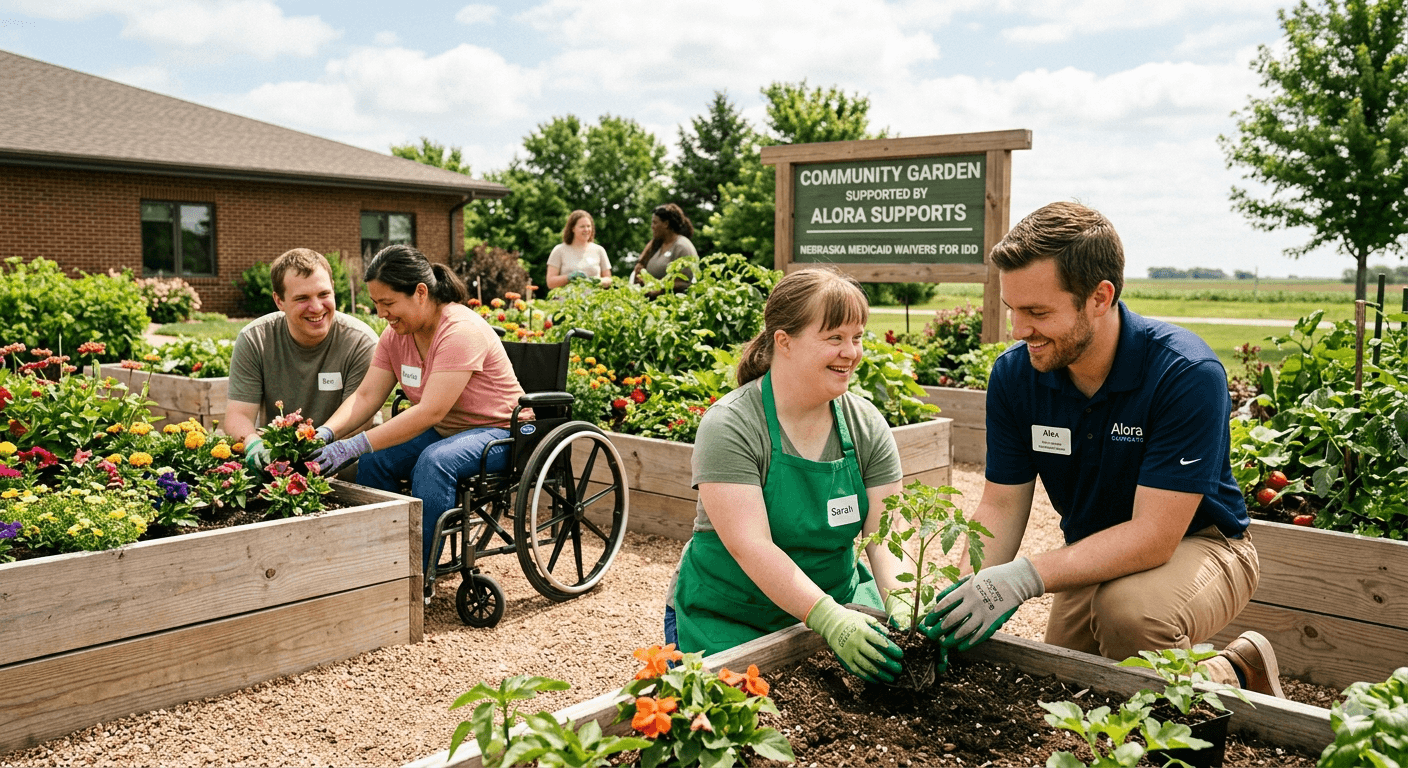
Community outings are common. Participants might go to the library, visit a park, shop at a grocery store, eat lunch at a restaurant, volunteer at a local nonprofit, or participate in community events. These outings provide real-world practice of skills and help participants stay connected to their communities.
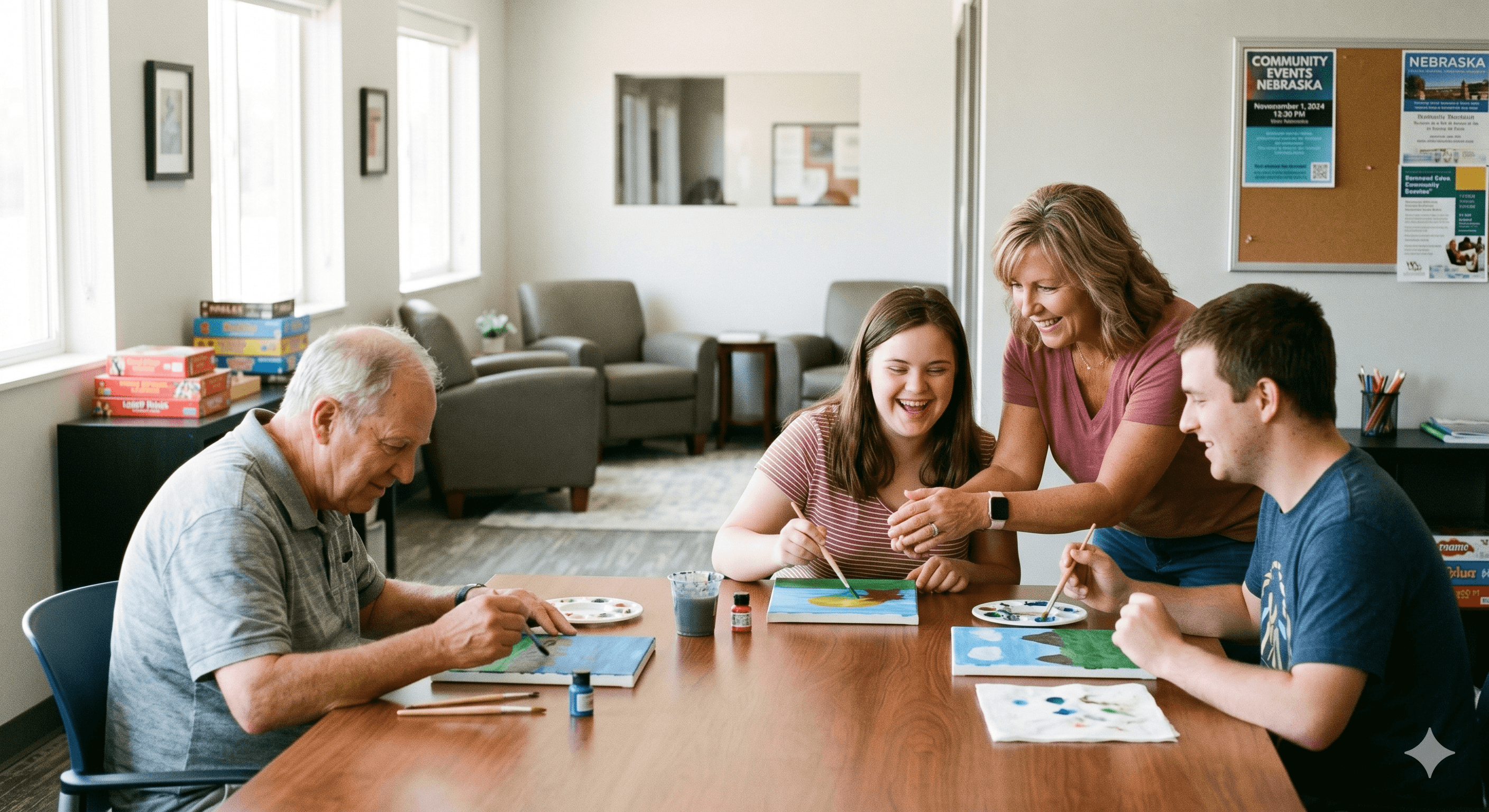
Social activities and recreation are built in. There might be art projects, music, games, exercise classes, or special events like holiday parties or field trips.
Lunch is typically provided or participants bring their own, and staff support those who need help with eating or who have dietary restrictions.
The goal is a balanced day that includes structure, socialization, skill-building, community engagement, and activities that keep participants engaged and learning.
Day Habilitation vs. Employment Services
Families sometimes wonder whether their loved one should be in a day habilitation program or in employment services. The distinction matters because they serve different goals.
Day habilitation focuses on skill development, socialization, and community engagement. The activities are designed to build and maintain functional skills, not to prepare for or support competitive employment. Participants aren't earning wages — they're participating in a program.
Employment services — including prevocational services and supported employment — focus specifically on preparing for and supporting competitive employment. The goal is for the individual to work in a job, earn wages, and develop employment-related skills.
Some individuals move from day habilitation to employment services as they develop skills and readiness. Others participate in both — working part-time with employment supports and attending day hab the rest of the week. And some individuals are better served long-term by day habilitation rather than employment because that's what fits their abilities and goals.
There's no judgment in choosing day habilitation over employment services. What matters is what helps your loved one have a meaningful, engaged day and work toward their own goals.
How to Choose a Day Habilitation Program
Not all day programs are the same. Some are highly structured with a focus on skill-building. Others are more recreational with an emphasis on socialization and activities. Some serve primarily individuals with mild to moderate IDD, while others are equipped to support people with more significant needs.
When you're evaluating day habilitation programs for your loved one, here are questions to ask and factors to consider:
What is the program's philosophy and approach?
Some programs emphasize functional skill-building — teaching life skills that translate to greater independence. Others focus more on socialization and recreation. Neither is wrong, but you want a program whose approach aligns with your loved one's needs and your family's goals.
What does a typical day actually look like?
Ask for a detailed schedule. How much time is spent on structured activities versus free time? How often do they go into the community? What kinds of skills are they working on? The schedule will tell you whether the program offers the kind of structure and engagement your loved one needs.
What is the staff-to-participant ratio?
Lower ratios generally mean more individualized attention and support. If your loved one needs close supervision or one-on-one support for certain activities, the ratio matters significantly.
What training do staff members have?
Ask about staff qualifications, training in supporting people with IDD, experience with behavioral challenges if relevant, and turnover rates. Consistent, well-trained staff make a big difference in program quality.
How do they handle behavioral challenges?
If your loved one has challenging behaviors, you need to know that the program can manage those appropriately. Ask about their behavior support approach, what interventions they use, and how they communicate with families when issues arise.
What community integration looks like?
Some programs do community outings daily. Others go weekly or less frequently. If community integration is important to you, find out how often they get out, where they go, and what participants do during those outings.
How do they accommodate different ability levels?
In a mixed-ability program, how do they ensure that everyone is appropriately challenged and engaged? Can they differentiate activities so that someone with higher skills isn't bored and someone with greater support needs isn't overwhelmed?
What is their transportation situation?
Many programs provide transportation, but not all. If you're relying on the program to transport your loved one, confirm that they serve your area and that their schedule works for your family.
How do they communicate with families?
You want to know what's happening during the day, how your loved one is doing, and if there are any concerns. Find out how the program communicates — daily notes, apps, regular calls, scheduled check-ins, or something else.
Can you visit and observe?
The best way to evaluate a program is to see it in action. Ask if you can visit during program hours, observe activities, meet staff, and get a feel for the environment.
Red Flags to Watch For
While most day habilitation programs are well-run and genuinely supportive, there are some warning signs that should make you look elsewhere:
Programs that are unwilling to let you visit or observe during program hours. If they're only willing to show you the space when it's empty, that's a problem.
Staff who seem overwhelmed, frustrated, or disengaged when you visit. The staff's demeanor and approach tell you a lot about program culture.
Environments that feel more like a holding space than an active program. If participants are mostly sitting around watching TV or doing nothing, that's not meaningful day habilitation.
Programs that can't clearly explain their approach, goals, or what a typical day involves. Vague answers suggest they don't have a clear program structure.
Reluctance to discuss how they handle behavioral challenges or accommodate different needs. Good programs are transparent about their approach.
High turnover among participants or families frequently pulling their loved ones out. Ask why people have left if you can — patterns matter.
How to Access Day Habilitation in Nebraska
Day habilitation services are available through both the CDD waiver and the FSW waiver. If your loved one is enrolled in one of these waivers and day habilitation is included in their Individual Service Plan, Medicaid covers the cost of the program.
Steps to access day habilitation:
Talk to your case manager about your loved one's need for daytime structure and support. They'll help assess whether day habilitation is appropriate and work to get it authorized on the service plan.
Identify day programs in your area. Your case manager should have a list of approved providers, or you can search for agencies offering day habilitation in your county.
Visit programs and ask questions. Don't choose based solely on convenience or what's available first — find a program that genuinely fits your loved one.
Work with the chosen program to complete intake paperwork, coordinate transportation if needed, and plan for the transition into the program.
Stay involved once your loved one starts. Regular communication with program staff ensures you know how things are going and can address any concerns early.
If your loved one isn't on a waiver yet, starting the application process is the first step. Day habilitation isn't available without waiver enrollment, so getting on the CDD or FSW waiver is essential.
What About Rural Areas?
Day habilitation programs are more common in or near larger towns and cities simply because they require physical space, staff, and enough participants to make the program viable. This can be challenging for rural families.
If there's no day program in your immediate area, you may need to consider programs in the nearest larger town. Some programs have extensive service areas and provide transportation across multiple counties.
If transportation to a distant program isn't feasible, talk to your case manager about alternative services that might provide some daytime structure — perhaps Supported Family Living with community-based activities, or connecting with community resources in your area.
Some provider agencies are exploring satellite programs or smaller-scale options in underserved rural areas, particularly if there are multiple families with the need. Advocating for services to expand to your area can sometimes lead to change.
When Day Habilitation Isn't the Right Fit
Day habilitation works well for many adults with IDD, but it's not the right answer for everyone.
Some individuals are capable of and motivated toward competitive employment. For them, supported employment or prevocational services make more sense than day hab. Others need more intensive medical or behavioral support than a typical day program can provide. In those cases, a specialized program or a different service model may be necessary.
And some people genuinely prefer to stay home or have routines that work better outside a structured program. If someone is content at home, has meaningful activities and connections, and doesn't need or want the structure of a day program, that's okay too.
The goal is finding what works for the individual and what helps them have a meaningful, engaged life. Day habilitation is one option among many.
The Bottom Line
Day habilitation programs give adults with IDD somewhere to go during the day, something to do, people to connect with, and opportunities to learn and grow. For families navigating the transition from school-based services or needing daytime support for their loved one, day hab can be essential.
Not all programs are the same, and finding the right fit requires asking questions, visiting programs, and understanding what your loved one actually needs. But when you find a good program with skilled staff, meaningful activities, and a supportive environment, it can make an enormous difference in your loved one's quality of life and your family's ability to sustain caregiving.
Looking for day habilitation programs in Nebraska? Connect with Alora Supports to explore daytime support options and find programs that fit your loved one's needs.