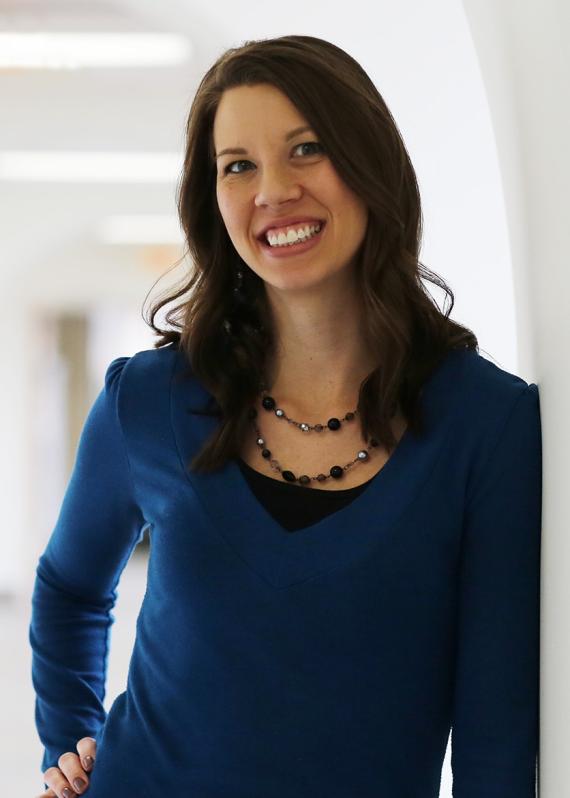
Meet Erin: The Heart Behind Alora’s STAGE Assessment
Meet Erin and learn how STAGE helps families turn big hopes into clear next steps.

When families first hear the word “assessment,” it can bring up a mix of emotions. Curiosity, hope, and often a quiet sense of worry. Will this label my child? Will it feel clinical? Will it tell me something I am not ready to hear?
At Alora, we see assessments differently. We see them as conversations. As moments of reflection. As tools for clarity and direction, not judgment.
That belief is what shaped the STAGE Assessment, and it is also what drew Erin Herschell to lead the program.
We sat down with Erin to talk about her background, her approach, and why STAGE feels different from anything most families have experienced before.
Can you share a bit about your background and what drew you to this work?
Erin: I earned my Bachelor of Arts from Pittsburg State University and my Master of Science in Counseling Psychology from the University of Kansas. I am a Licensed Clinical Professional Counselor, and my career has spanned nonprofit child welfare, community mental health, early intervention, and university based child development.
I have supported families navigating foster care, provided therapy in community clinics, supervised teams delivering in home services, and led education programs at the Edna A. Hill Child Development Center at the University of Kansas. Across all of it, my focus has always been on supporting individuals and their families in ways that truly matter to them.
What led you to Alora, and what about this work continues to matter to you?
Erin: Throughout my career, I have always cared most about providing practical and purposeful support. I want families to feel understood and supported in real ways, not just on paper.
That continues at Alora. The heart of this agency is centered on the people. The focus is not on programs or systems. It is on relationships and helping people build lives that feel meaningful to them.
For families hearing about STAGE for the first time, how do you explain what it is?
Erin: STAGE helps identify areas of strength to build upon and areas of need that may be creating stress or barriers. It helps families plan for the future by understanding what skills will support bigger goals over time.
It also helps guide goals that are individualized and person centered. Everything is aligned with what matters most to the individual, not just what services are available.
Many parents feel nervous when they hear the word assessment. How is STAGE different?
Erin: STAGE is conducted in a conversational format. There are no right or wrong answers. It is simply learning from caregivers and from the individual about their skills, routines, and goals.
We are not comparing anyone to anyone else. We are focusing on each person’s unique strengths, accomplishments, and where they want to grow.
What does STAGE help families see that they often felt but could not name before?
Erin: It is easy to create big goals like living independently. It is harder to know what steps will help get there.
STAGE breaks those big goals into smaller, realistic skills. It also helps families see how small accomplishments today are building toward something bigger. Since it is repeated yearly, families can actually see progress over time.
Can you share a moment with a family that stayed with you?
Erin: One conversation that stands out was with a parent of a young teenager. She was sharing all of her racing thoughts about adulthood, jobs, and living arrangements. You could feel how heavy it all felt for her.
As I explained STAGE and how it could help create a roadmap, I could visibly see her stress ease. It was like taking all of those thoughts out of her head and turning them into something manageable.
How does STAGE support parents in thinking about the future with hope?
Erin: This might be my favorite part of STAGE. Parents are busy in today and tomorrow. Looking far ahead can feel overwhelming.
STAGE helps create a path. It identifies goals for now and for later. It gives families a sense of direction instead of just uncertainty.
Why is it important that STAGE looks at strengths and challenges together?
Erin: Looking at both keeps the process grounded in who the person is, not just what is hard for them.
When people see their abilities clearly named, it builds confidence and hope. That makes it easier to work on tougher areas over time. Plans feel more realistic and more sustainable.
For a parent who is unsure if STAGE is right for them, what would you want them to know?
Erin: STAGE is a low pressure way to get a clearer picture of what might help your child and your family right now and in the future.
You walk away with understanding, not labels. It is about creating insight, direction, and a shared language for growth.
At Alora, we believe the best plans begin with listening. STAGE is one way we do that, and Erin’s presence ensures it always feels like a partnership, not a process.
This is what belonging can look like.
Come on in.