What is a Case Manager and What Do They Do? Nebraska IDD Services
This guide explains what case managers do, how they can help your family.
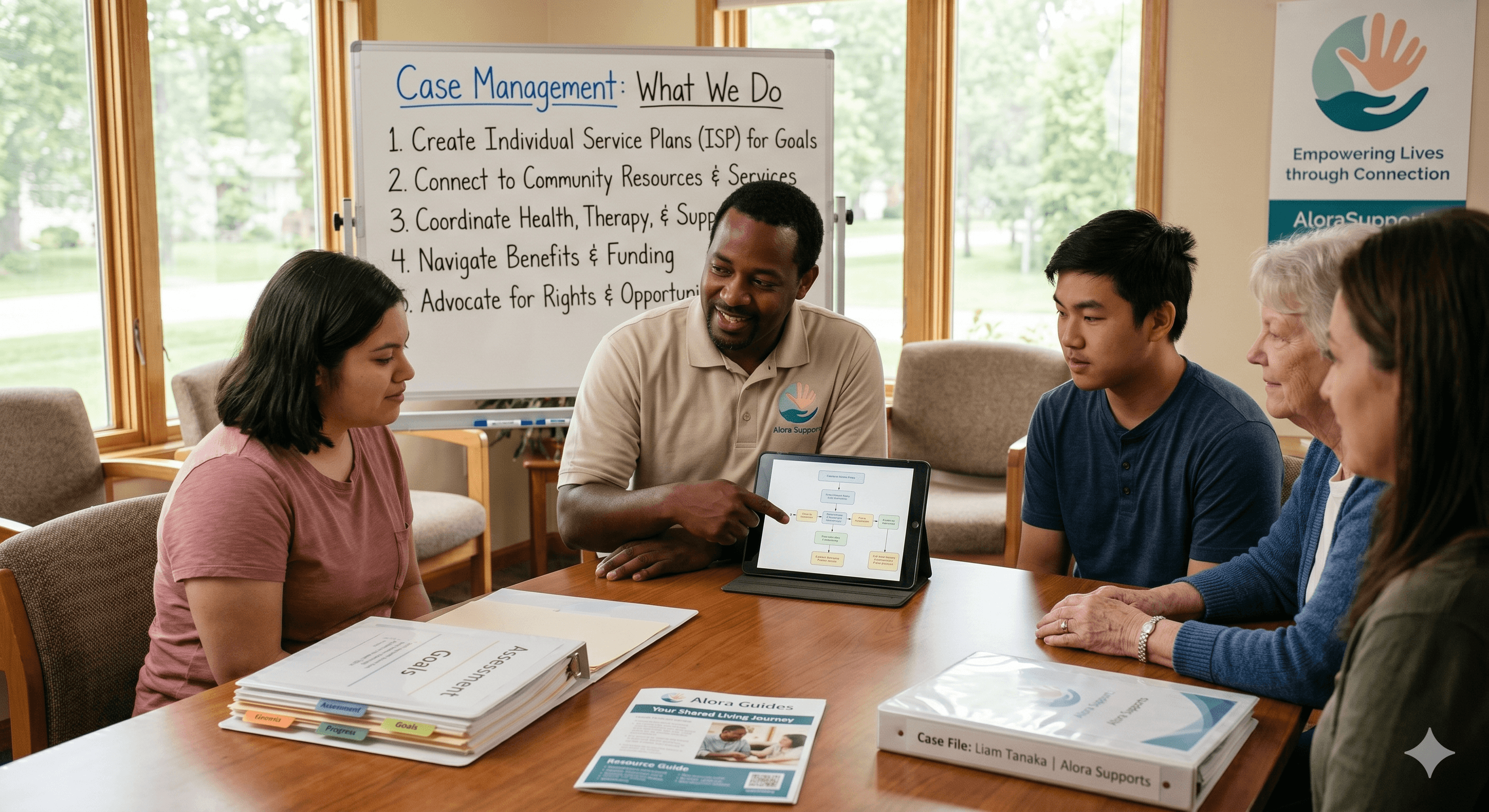
If you're new to Nebraska's system of services for people with intellectual and developmental disabilities, one of the first things you'll be told is that you need a case manager. You'll hear this from doctors, from school transition coordinators, from other parents, from social workers — everyone will say "make sure you have a case manager."
But what actually is a case manager? What do they do? How do you get one? And why does everyone say they're so important?
The truth is that navigating Nebraska's IDD services system without a case manager is nearly impossible. The waiver applications, the assessments, the service authorizations, the provider agencies, the annual reviews — there are too many moving parts for families to coordinate everything themselves.
Case managers are your guide through the system. They're the people who help you understand what services exist, determine what your loved one qualifies for, complete the paperwork, connect you with providers, and ensure services are actually being delivered.
This guide explains what case managers do, how they can help your family, how to get one, and how to build a productive working relationship with them.
What is a Case Manager?
A case manager — sometimes called a service coordinator — is a professional who works with individuals with IDD and their families to coordinate services, navigate the waiver system, and ensure that the person's needs are being met.
Case managers work through Nebraska's Department of Health and Human Services (DHHS) Division of Developmental Disabilities or through agencies contracted by DHHS. They're assigned to individuals based on county and service needs.
What case managers are responsible for:
Assessing eligibility for waiver programs
Helping families complete waiver applications
Coordinating level of care assessments
Developing Individual Service Plans (ISPs)
Authorizing services and determining appropriate service hours
Connecting families with provider agencies
Monitoring service delivery to ensure quality and appropriateness
Conducting annual reviews and reassessments
Addressing concerns or problems with services
Advocating for the individual's needs within the system
Your case manager is your primary point of contact for anything related to waiver services. They're the person who makes things happen in the system.
What Case Managers Actually Do Day-to-Day
To understand how case managers help families, it's useful to see what they actually do in practice.
Assessing Needs and Eligibility
When you first connect with a case manager, they'll conduct an assessment to understand your loved one's needs, abilities, and support requirements. They'll ask about daily routines, medical needs, behavioral challenges, communication abilities, and what supports are currently in place.
This assessment helps determine which waiver program is most appropriate and what level of care your loved one requires. The case manager uses this information to guide the application process.
Navigating the Waiver Application
Case managers handle the actual waiver application. They gather required documentation, coordinate level of care assessments with qualified evaluators, submit applications to DHHS, and follow up on the status of applications.
You provide the information and documentation they need, but they do the heavy lifting of getting everything submitted correctly.
Developing the Individual Service Plan
Once your loved one is approved for a waiver, the case manager works with you to develop an Individual Service Plan. This document outlines what services will be provided, how many hours of each service are authorized, which provider agencies will deliver services, and what goals the services are working toward.
The ISP is person-centered, meaning it should reflect your loved one's preferences, goals, and needs — not just what's available or convenient. A good case manager ensures the ISP is truly individualized.
Connecting You With Provider Agencies
Case managers maintain relationships with provider agencies throughout their service area. When you need a specific service — residential placement, day program, in-home support, therapy — your case manager can recommend agencies that provide that service and help facilitate introductions.
They can tell you which agencies have good reputations, which ones serve your county, and which ones might be a good fit based on your loved one's needs.
Monitoring Services
Once services begin, case managers are responsible for monitoring to ensure services are being delivered as authorized. They conduct regular check-ins with families and providers, review documentation, address any concerns about quality or appropriateness of services, and make adjustments when needed.
If a service isn't working or if your loved one's needs change, your case manager should catch that and address it.
Annual Reviews
Services are reviewed at least annually to ensure they're still appropriate. Your case manager coordinates these reviews, reassesses your loved one's needs, updates the ISP based on progress or changing needs, and reauthorizes services for the coming year.
This annual review is when you can request changes to services, ask for additional hours, or discuss new needs that have emerged.
Problem-Solving and Advocacy
When problems arise — a provider isn't showing up, services aren't meeting needs, billing issues come up, or you're hitting roadblocks — your case manager is supposed to help troubleshoot and find solutions.
Good case managers advocate for their clients within the system, pushing for services when they're needed and working to resolve issues that get in the way of quality care.
What Case Managers Don't Do
It's also important to understand what case managers don't do, because families sometimes have unrealistic expectations.
Case managers don't provide direct care. They don't come to your home to help with personal care, take your loved one to appointments, or provide hands-on support. They coordinate the services that provide those things, but they don't deliver them directly.
Case managers don't work for provider agencies. They work for DHHS or contracted agencies, and their role is to ensure your loved one's needs are met — not to represent any particular provider. They should be neutral in helping you choose providers.
Case managers can't guarantee immediate service availability. They can authorize services and connect you with providers, but if there are waiting lists or workforce shortages, they can't make those disappear.
Case managers aren't therapists or counselors. If your family needs mental health support, family therapy, or counseling, that's not their role. They can help connect you with those resources, but they don't provide them.
Understanding these boundaries helps set appropriate expectations for what your case manager can and can't do for your family.
How to Get a Case Manager
If your loved one has IDD and you need to access waiver services in Nebraska, getting a case manager is the first step.
To request a case manager:
Contact Nebraska DHHS Division of Developmental Disabilities. You can call your local DHHS office or reach out to the state division directly.
Explain that your family member has intellectual or developmental disabilities and you need to access services. They'll start the process of assigning a case manager.
Provide basic information about your loved one — name, age, diagnosis, where you live, and what kind of support needs they have.
A case manager will be assigned based on your county and your loved one's needs. In some areas, there are multiple agencies that provide case management, and you may have some choice in which one you work with.
Once assigned, your case manager will reach out to schedule an initial meeting and begin the assessment process.
If you're already connected to the disability services system — perhaps through early intervention services, school-based transition planning, or another program — you may already have a case manager or service coordinator. Ask whether that person can continue in that role or if you need someone different for adult waiver services.
What Makes a Good Case Manager?
Not all case managers are equally effective. Some are proactive, responsive, and genuinely helpful. Others are overwhelmed, hard to reach, and seem to do the bare minimum.
Qualities to look for in a good case manager:
Responsiveness — They return calls and emails within a reasonable timeframe. You're not waiting weeks to hear back on urgent questions.
Knowledge of the system — They understand the waivers, the services, the regulations, and the local provider landscape. They can answer your questions or find the answers if they don't know.
Proactive communication — They don't just respond when you reach out; they check in regularly, give you updates on applications or authorizations, and let you know about changes that affect your family.
Advocacy — They push for services when your loved one needs them, rather than just accepting whatever's easiest or most convenient for the system.
Listening skills — They actually listen to what you're saying about your loved one's needs rather than making assumptions based on diagnosis or paperwork.
Flexibility — They're willing to meet at times and places that work for your family, they accommodate communication preferences, and they adapt their approach based on your situation.
Follow-through — When they say they'll do something, they do it. You're not constantly having to remind them or chase them down.
If your case manager has these qualities, you're in good hands. If they don't, it may be worth exploring whether you can request a different case manager.
How to Build a Good Relationship With Your Case Manager
Your case manager can be your greatest ally in navigating the system, but that relationship works best when it's built on clear communication and mutual respect.
Tips for working effectively with your case manager:
Be organized. Keep all your loved one's paperwork, medical records, assessments, and documentation in one place so you can provide what your case manager needs quickly.
Communicate clearly about needs. Don't assume your case manager knows what you need. Be specific about what's working, what's not, and what you're hoping to accomplish.
Be responsive. If your case manager reaches out for information or documentation, respond promptly. The system moves slowly enough without adding unnecessary delays.
Document everything. Keep notes from meetings, save emails, and document phone conversations. If issues arise later, having a record of what was discussed matters.
Advocate without being adversarial. It's okay to push for services and to disagree with your case manager's recommendations. You can do that firmly while still being respectful and collaborative.
Remember they have a caseload. Most case managers are juggling many families. Being understanding about realistic response times while still holding them accountable helps.
Give feedback. If your case manager is doing a great job, let them know. If something isn't working, address it directly rather than letting frustration build.
The relationship should feel collaborative. You're the expert on your loved one; your case manager is the expert on the system. Working together produces the best outcomes.
When to Request a Different Case Manager
Sometimes despite everyone's best efforts, a case manager just isn't a good fit. Maybe communication styles don't mesh, maybe they're overwhelmed and can't keep up with your needs, or maybe there's been a breakdown in trust.
Signs it might be time to request a different case manager:
Consistent unresponsiveness — you're regularly waiting weeks for return calls or emails on important matters.
Lack of knowledge — they don't seem to understand the waiver system, give you incorrect information repeatedly, or can't answer basic questions.
No follow-through — things they promise to do don't happen, authorizations don't get processed, and you're constantly having to follow up.
Dismissiveness — they don't take your concerns seriously, minimize your loved one's needs, or make you feel like you're being difficult for asking questions.
Conflict of interest — you discover they have relationships with providers that make you question whether their recommendations are truly neutral.
If you decide to request a different case manager, contact the agency or DHHS office that assigned them. Explain professionally why the current arrangement isn't working and request a reassignment.
You have the right to a case manager who serves your loved one's needs effectively.
Case Management Across Different Life Stages
Your relationship with case management evolves as your loved one moves through different life stages.
During childhood, case management might be minimal if your child is primarily receiving school-based services. Some families don't even have an adult case manager until their child approaches transition age.
During transition (ages 16-21), case management becomes more active. You're applying for adult waivers, planning for what happens after school ends, and coordinating the shift from pediatric to adult services.
In early adulthood, case managers help establish adult services, find residential placements if needed, set up day programs, and coordinate supports as your loved one settles into adult life.
In ongoing adulthood, case management maintains services, handles annual reviews, adjusts supports as needs change, and addresses any issues that arise.
As parents age, case managers help families plan for what happens when parents can no longer provide care, coordinate transitions to more independent or residential settings, and ensure continuity of services.
Understanding that case management is a long-term relationship helps you see it as a partnership rather than a one-time transaction.
The Bottom Line
Case managers are the navigators of Nebraska's IDD services system. They're the people who turn your loved one's needs into authorized services, who connect you with providers, who advocate within the bureaucracy, and who ensure that services actually happen.
A good case manager can make the difference between a family that successfully accesses supports and one that gets lost in the system. They're not miracle workers and they can't fix every problem, but they're essential partners in getting your loved one the services they need.
Understanding what case managers do, how to work with them effectively, and when to push for better service helps you make the most of this critical relationship.
Need help navigating Nebraska's IDD services system or looking for information about case management? Connect with Alora Supports to talk through your situation and explore what supports might be available for your family.